
This coming Sunday June 21st, 2026 at the Chiton Restaurant will be my last cover gig EVER. This is because after a lot of thought, I’ve decided to finally retire from playing covers as a professional function.
I’m walking away from Coverland once and for all.
Now, I’m not retiring from music nor am I retiring from the stage. What I am doing is retiring from the particular role I’ve been filling for a long time now, the one where I show up, read the room, and play the songs people want to hear, the way they want to hear them.
It’s a specific thing I’m walking away from, and I want to be specific about it.
This Is What I’m Actually Retiring From?
There’s a version of playing covers that is genuine artistic work. You choose a song because it means something to you, you bring your own interpretation to it, you make it yours in some way. That’s a musician making a creative choice.
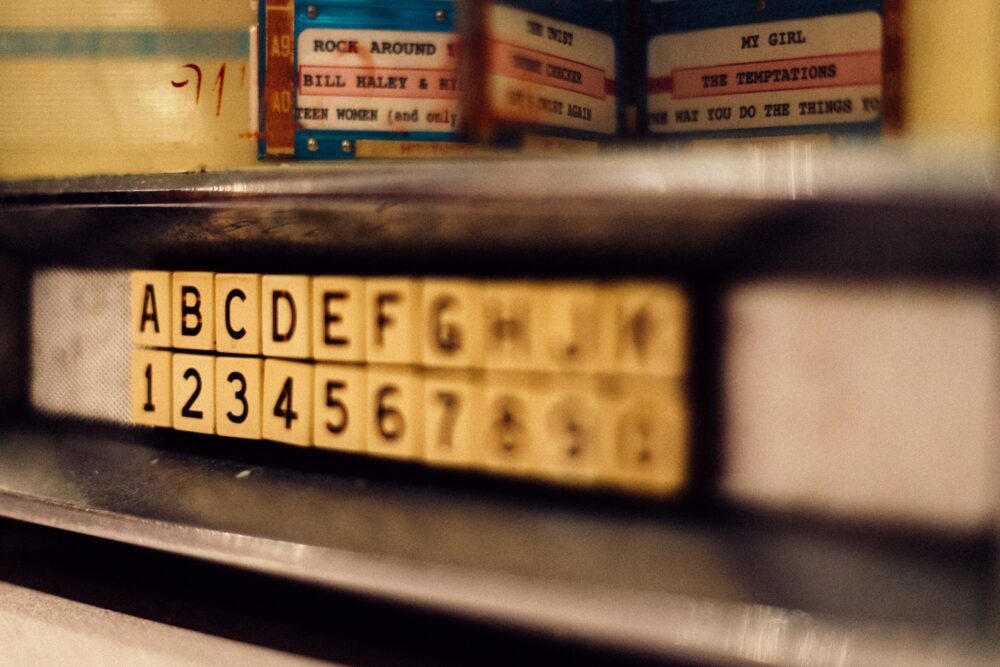
Then there’s the other version. The one where you’re essentially a human jukebox. You’re hired to deliver familiar songs in a recognisable form to a room full of people who want background music, or a party soundtrack, or a pub atmosphere.
The song is a product and your job is to replicate it accurately enough that it does its function.
Both are legitimate. Both require real skill. But only one of them is an artistic act, and I’ve spent a significant portion of my performing life doing the other one.
That’s what I’m retiring from. The function. The transaction. The role of replicator.
How Long Is A Long Time
I’ve been learning, playing and writing music since I was 12 years old and I’m 55 now. Whatever age you’re reading this and doing the mental arithmetic, yes, it’s that many years.
For most of that time, cover gigs have been a big part of the picture. They paid for gear. They kept me on stage when original music wasn’t putting me in front of audiences. They were, in many ways, the practical engine that kept the whole thing running.
I’m not dismissing that. But when you zoom out and look at the actual scale of it, the decades of playing to set-lists built around other people’s songs, the years of Friday and Saturday nights plus Sunday afternoons spent making audiences happy on someone else’s terms, it starts to look less like a chapter and more like a very long habit.
And habits, especially comfortable ones, deserve to be examined.
The Creative Tax Nobody Talks About
Here’s the thing that working musicians know but rarely say out loud.
Playing functionally for long enough does something to your relationship with your own music. It’s not burnout exactly. It’s more like a low-level background noise that builds gradually until you stop noticing it’s there.
You’re so practiced at serving the song, serving the room, serving the moment, that your own creative instincts start operating at a lower volume.
Every time you walk on stage to deliver someone else’s song the way they expect it, you’re reinforcing a particular muscle. The compliance muscle. The replication muscle. And the more you use it, the quieter everything else gets.
I’ve been quieter than I should have been for a while now.
What Covers Actually Gave Me
Before I go any further, I want to be straight about something.
The years I spent playing covers weren’t wasted. Not even close. They built things in me that I couldn’t have got any other way.
Stagecraft. The ability to read a room and adjust in real time. A feel for pocket and timing that only comes from playing the same songs hundreds of times until they’re completely in your body. The discipline of being consistent under pressure, of delivering when the room is indifferent or the monitor mix is terrible or the stage is the size of a toilet cubicle.
Those things came directly from functional performing, and they’re mine to keep. I’m walking away from the role, not from what it taught me.
Letting Go, And Why That’s Harder Than It Sounds
There’s a concept in Buddhist thinking that I keep coming back to, not as a philosophical exercise but as something genuinely practical. Non-attachment. The idea that clinging to things, even good things, even things that have served you well, eventually creates its own kind of suffering.
Retiring from something this long-running isn’t just a career decision. There’s financial reliability in regular cover gigs. There’s social comfort in being the person who can walk into a room and make people happy with music they already love. There’s a professional identity that comes with it too, people know what you do, they know what to expect, there’s safety in that.
Letting go of all three at once requires you to look clearly at what you’re holding and ask an honest question. Is this still mine, or am I just used to carrying it?
For me, the honest answer has become clear. It’s time to put it down.
The Difference Between Replication and Interpretation
I also want to be clear about something, because I suspect some people will read “retiring from covers” and picture me never playing another song I didn’t write.
That’s not what this is.
I will still play covers. I’ll probably always play covers. But there is a world of difference between choosing to play someone else’s song because it moves you, because you have something to say with it, because it fits the moment in a way nothing else does, and playing it because it’s on the list and someone’s waiting to hear it.
One of those is an artistic act. The other is a service transaction.
When I play a cover from here on, it’ll be because I chose it. Because I have a reason for it. Because I’m bringing something of my own to it rather than trying to disappear into a faithful reproduction.
That’s interpretation. That’s a musician making a choice. It’s the human jukebox version of my career that I’m done with.
Still On Stage. Different Reasons.
Just to be completely clear: I’m not stepping away from performing.
If anything, the whole point of this decision is that performing gets to mean something again. When I walk onto a stage from here on, it’ll be with my own music, my own choices, my own reasons for being there.
The stage hasn’t changed. My relationship with it has and in closing, I‘ve always thought of myself as a musician who plays covers, not a cover musician who also writes songs. For most of my performing life, the evidence didn’t always back that up.
But it does now.
Yes, the human jukebox is now retired but the songwriter/musician in me is still very much at work.
So, if you are in the area come on down and say hello this coming Sunday, June 21st at the Chiton Restaurant (upstairs at the Chiton Rocks SLSC) from 11am until 2pm. It will be great to see some familiar faces in the crowd.
Peace,
Corey 🙂